
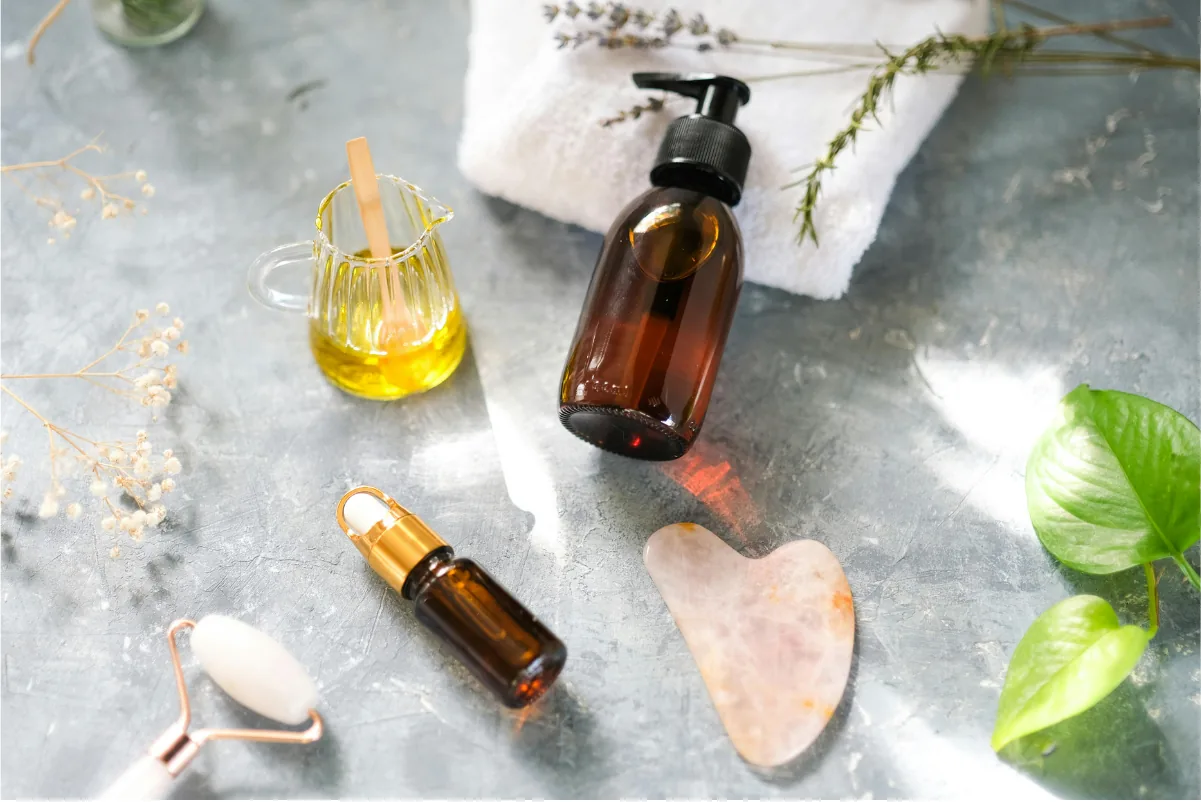
I’ve simplified my skincare routine quite a lot over the past year, and facial oils have become one of the things I reach for most. Rather than using lots of different creams and serums, I now tend to keep things simple, choosing a few natural face oils depending on how my skin feels and the time of day.
One of the biggest differences has also been how I apply them. I don’t put facial oil straight onto completely dry skin. Instead, I apply it while my skin is still slightly damp after using a facial mist or spray. I find this leaves my skin feeling much more comfortable and nourished, without needing lots of additional products.
In this article, I’ll share how to apply facial oils as part of a simple skincare routine, the oils I personally use – including rosehip and jojoba – and some options to consider for dry, mature, oily and sensitive skin. I’ll also share a few of the other changes I’ve made to my cleansing routine that seem to have made a real difference to my skin.
This post may contain affiliate or referral links. If you make a purchase through one of these links, I may earn a small commission or receive a benefit, at no extra cost to you. I only share products and services I genuinely use, trust or believe may be helpful.
How to Apply Facial Oils
One thing I didn’t fully appreciate when I first started using facial oils was that oil itself doesn’t add water to the skin. This is why I now prefer to apply mine while my skin is still slightly damp, rather than waiting for it to dry completely.
After cleansing, I use a facial mist or spray and then gently press a few drops of oil into my skin while it is still damp. I find this gives me a much softer, more comfortable finish and helps avoid that feeling of oil simply sitting on top of dry skin.
My basic method is:
- Cleanse your skin.
- Apply your chosen facial mist, hydrosol or water-based spray.
- While your skin is still slightly damp, warm 2-3 drops of facial oil between your fingertips.
- Gently press and massage the oil over your face and neck.
- If your skin still feels particularly dry, you can follow with a moisturiser or balm to help seal everything in.
I use different oils in the morning and evening, with rosehip oil and jojoba oil being the two I currently reach for most. Which oil works best can also depend on your skin type, so I’ll come onto some of the different options below.sessment once the finished product is analysed, it raises an important question: how much can an ingredient label really tell us?
Rosehip Oil for Face – My Evening Favourite
Rosehip oil is probably my favourite facial oil and the one I use most often in the evening. After cleansing and applying my facial mist, I usually press a few drops into my damp skin and quite often that is all I need.
Rosehip oil naturally contains essential fatty acids, including linoleic and alpha-linolenic acids, as well as antioxidant compounds such as carotenoids and tocopherols. These components can help support the skin barrier and keep skin feeling soft and nourished.
It is often promoted for everything from pigmentation to wrinkles and scarring. There is some promising research into rosehip and skin appearance, but the evidence is still fairly limited, so I wouldn’t consider it a miracle anti-ageing treatment. Personally, what I notice most is that my skin feels nourished without the oil feeling excessively heavy, and over time I feel my skin tone looks more even.
Although you’ll often see rosehip described as “non-comedogenic”, I think it’s better to remember that everyone’s skin can respond differently to oils. For me, it has worked particularly well even though my skin can be prone to hormonal spots.
Jojoba Oil for Face – My Lighter Morning Oil
In the morning, I tend to reach for jojoba oil because I find it lighter than some of the richer oils I use at night. I usually mix a small amount of jojoba with one drop of rosehip oil and apply the blend to my skin while it is still damp from my facial spray.
Interestingly, jojoba isn’t technically an oil. It is a liquid wax made predominantly from wax esters, which have similarities to some of the lipids naturally found in human sebum. This is one reason jojoba has become such a popular ingredient in skincare.
I particularly like it when my skin feels a little sensitive or easily irritated. It feels light and nourishing without leaving my face overly greasy, which also makes it a good option for me during the daytime.
Jojoba is often recommended for oily and blemish-prone skin too, although I wouldn’t describe any facial oil as guaranteed not to clog pores – everyone’s skin is different. For me, it has been a really useful everyday oil and pairs particularly well with the slightly richer rosehip oil.
Quality Matters When Choosing Facial Oils
If you’re going to use a facial oil regularly, I think the quality of the oil is just as important as choosing the right one for your skin.
I prefer to buy from reputable suppliers and look for pure oils without added fragrance or unnecessary ingredients. Where possible, I also choose organic and cold-pressed oils, particularly for the oils I use regularly on my face.
Two brands I’ve been really happy with are Fushi and The Soapery. I like that I can buy individual oils rather than complicated blends, which also makes it much easier to know exactly what I’m putting on my skin.
It’s also worth checking how an oil is packaged and stored. Some plant oils are more vulnerable to light, heat and oxidation than others, so I tend to buy sensible-sized bottles, keep them away from heat and direct sunlight, and pay attention to their recommended shelf life.
You don’t necessarily need a cupboard full of expensive facial oils either. I’ve found that a few good-quality oils that suit my skin are much more useful than having lots of different products.

Which Facial Oil Is Best for Your Skin Type?
One of the things I love about using individual facial oils is that you can tailor them to your skin rather than buying one product and hoping it does everything. You can also blend oils together – I prefer to keep this simple, usually starting with one main oil and adding a drop of another when my skin needs something extra.
These are the combinations I would consider for different skin types.
Dry or Mature Skin – Argan Oil + Rosehip Oil
Main oil: Argan oil
Optional addition: Rosehip oil
Mist: Evolve Daily Defence Moisture Mist
For skin that is becoming drier or feeling less supple, argan oil is a lovely option. It contains predominantly oleic and linoleic fatty acids as well as vitamin E compounds, giving it useful emollient and antioxidant properties.
Rather than using argan alone, you could add a drop of rosehip oil to create a simple two-oil blend. Rosehip brings a different fatty-acid profile and is still one of my personal favourites for evening use.
For particularly dry or mature skin, vitamin E oil could also be used occasionally in a small amount alongside your chosen facial oil. I wouldn’t automatically use it every day – richer products don’t suit everyone’s skin, and topical vitamin E can cause irritation in some people.
I would pair these oils with Evolve Daily Defence Moisture Mist. It contains rose and orange blossom waters alongside glycerin, hyaluronic acid, prebiotic inulin and prickly pear extract, so you’re applying a water-based, humectant-containing product before sealing that moisture in with your oils.
Oily or Blemish-Prone Skin – Hemp Seed Oil
Main oil: Hemp seed oil
Alternative: Jojoba
Mist: Serozinc, with Evolve if extra hydration is needed
It might seem counterintuitive to put oil onto already oily skin, but choosing the oil carefully is important. Hemp seed oil is relatively rich in linoleic acid and has a much lighter fatty-acid profile than some of the richer, oleic-heavy oils.
I’d start with a very small amount rather than creating a complicated blend. Jojoba is another option here and is the one I personally use regularly.
For the spray, La Roche-Posay Serozinc is an interesting choice for oily or blemish-prone skin. It’s an extremely simple formula based around water, zinc sulphate and sodium chloride.
If skin also feels dehydrated, you don’t necessarily have to choose between addressing oiliness and hydration. You could use Serozinc first, allow it to settle briefly, follow with Evolve Daily Defence Mist and then apply a small amount of oil while your skin is still damp.
Sensitive or Easily Irritated Skin – Squalane
Main oil: Squalane
Optional alternative: Jojoba
Mist: By Sarah Reviver Hydrating Mist
For sensitive skin, I’d resist the temptation to use lots of botanical ingredients simply because they’re natural. A simpler routine can make it much easier to work out what your skin actually tolerates.
Squalane is a particularly interesting option because it is a stable, lightweight emollient that helps soften the skin and reduce moisture loss. One option to look at is Biossance 100% Squalane Oil, which contains just one ingredient – sugarcane-derived squalane – with no added fragrance. Look specifically for squalane rather than squalene, as they are related but aren’t the same ingredient.
I’d pair this with By Sarah Reviver Hydrating Mist. I particularly like that this formula is fragrance-free and essential-oil-free. It combines aloe vera and glycerin with ingredients including prebiotic inulin, making it an appealing option when you want hydration without adding fragrance to reactive skin.
With genuinely sensitive skin, I’d introduce the mist and oil separately and patch test first rather than starting several new products together.
Normal or Combination Skin – Camellia Seed Oil + Rosehip
Main oil: Camellia seed oil
Optional addition: Rosehip oil
Mist: Evolve Daily Defence Moisture Mist or a pure rose hydrosol
Camellia seed oil gives us another lovely option beyond the more familiar jojoba and rosehip. It’s predominantly rich in oleic acid and feels relatively light and silky on the skin, which can make it a useful everyday facial oil.
You could use it alone or add a drop of rosehip when you want something a little more nourishing – particularly in the evening.
For the water-based step, I’d choose Evolve when you want additional hydration, or keep things beautifully simple with a good-quality pure rose hydrosol. Amphora Aromatics Organic Rose Hydrolat is one I’ve considered for exactly this purpose.
Another more affordable option is Sukin Hydrating Mist Toner. It has a simple, alcohol-free formula containing rose water, glycerin and chamomile extract, and the glycerin makes it a useful hydrating step before applying your facial oil. It does contain phenoxyethanol as a preservative, which I personally prefer to avoid where possible, but I’ve included it because it’s an inexpensive and widely available option with an otherwise relatively simple formula.
The important thing is that these aren’t fixed recipes. Your skin can change with the seasons, your environment and simply how it feels that day. Start simply, see how your skin responds and then experiment with blending one or two oils rather than feeling you need an elaborate routine.
The Small Change That Made a Surprising Difference
I originally used reusable flannels to remove my oil cleanser, but I’ve since switched to using a fresh disposable facial cloth every time I cleanse. It sounds like such a minor change, but I’ve genuinely noticed an improvement in my skin since doing it.
One of the reasons I prefer them is simply practical. My oil cleanser is quite rich and heavy, so a lot of oil ends up on the cloth when I remove it. With a traditional flannel, that then needs to be thoroughly washed and dried before being used again, and I found I didn’t like repeatedly using cloths that had been saturated in facial oils.
I now use a fresh dry facial cloth, dampened with warm water, to thoroughly remove the cleanser and then dispose of it rather than reusing it.
The ones I personally use are Ourmed Life Face Towels, Disposable Biodegradable Facial Towels for Sensitive Skin. I’ve found them really effective for removing oil cleanser, and importantly for me, they’re sold as biodegradable rather than being conventional pre-moistened disposable face wipes.
I can’t say that switching cloths alone is responsible for the improvement I’ve seen in my skin, but it’s one of those very simple changes that has worked well enough for me that I don’t plan on going back to regular flannels.
Don’t Want to Make Your Own Oil Cleanser?
You certainly don’t need to make your own cleansing oil. If you’d prefer something ready-made, one option I like the look of is Evolve Organic Beauty Kalahari Dream Cleansing Oil. It’s a predominantly organic, 100% natural formula that emulsifies when you add water, making it easy to rinse or wipe away.
Another option worth looking at is Pai Light Work Rosehip Cleansing Oil. Pai is actually a brand I’ve used myself in the past – I used their Rosehip BioRegenerate Face Oil for quite a while and found it to be a really lovely quality facial oil.
Having looked at it again for this article, their rosehip oil is 99% organic and 100% natural origin. Pai uses a CO₂ extraction process on both the rosehip fruit and seed, and the finished oil is COSMOS Organic certified.
Their Light Work cleanser uses the same CO₂-extracted rosehip alongside oils including sunflower, olive and castor. It’s 100% natural origin and 91% organic, and you massage it onto dry skin before adding water, which turns the oil milky so it can be rinsed or removed with a warm damp cloth.
It does contain a small amount of essential oils and naturally occurring fragrance allergens, so that’s something to consider if your skin is particularly reactive. However, if you enjoy rosehip-based skincare and want a ready-made alternative to mixing your own cleansing oil, I think it’s another really nice option to explore.
Other Facial Oils I Use Occasionally
Although rosehip and jojoba are the facial oils I use most regularly, there are a couple of others I like to bring into my routine at different times.
Vitamin E oil is one I tend to use more during the winter when my skin can become noticeably drier. It is a richer oil, so I find I naturally reach for it less during the warmer summer months, but it can be a lovely addition when my skin needs some extra nourishment.
I also really like carrot oil during the summer. I use Fushi Wild Carrot Oil, which is actually carrot infused into organic sweet almond oil rather than carrot seed essential oil. It has a lovely orange colour from the carotenoids and gives my skin a subtle warm, sun-kissed-looking glow, which is one of the main reasons I enjoy using it at this time of year.
There are so many different facial oils available, and I think part of the fun is finding out what works for your own skin. You certainly don’t need to buy lots at once. I’d start with one or two good-quality oils, think about your skin type and what you want from the oil, and do a little research into its properties. From there, you can experiment with using oils individually or blending a drop or two together and gradually build a simple collection that really suits your skin.
A Few Tips Before You Start Using Facial Oils
If you’re new to facial oils, I’d definitely recommend keeping things simple at first. You don’t need a complicated collection of different oils to get started.
Begin with one oil that seems well suited to your skin type and introduce it gradually. This is particularly important if your skin is sensitive or prone to breakouts, as it makes it much easier to identify what is – or isn’t – working for you.
A few drops is usually plenty for the whole face. I find facial oils work particularly well when applied to slightly damp skin, as we covered earlier, and you can always add another drop if your skin still feels as though it needs more.
Patch testing is also sensible when trying a new oil or skincare product, especially if you have sensitive or reactive skin. And if an oil consistently leaves your skin feeling irritated, congested or uncomfortable, there’s no reason to persevere with it simply because it’s supposed to be good for your skin.
Most importantly, pay attention to your own skin. What works beautifully for somebody else may not be the best choice for you, and your skin’s needs can change throughout the year. Start simply, experiment gradually and build your routine around what your skin actually responds well to.
If you’re also looking at other ways to simplify your skincare routine and be a little more considered about the products you use, I’ve shared some of the other changes I’ve made in my Natural Skincare Swaps article.



Leave a Reply