
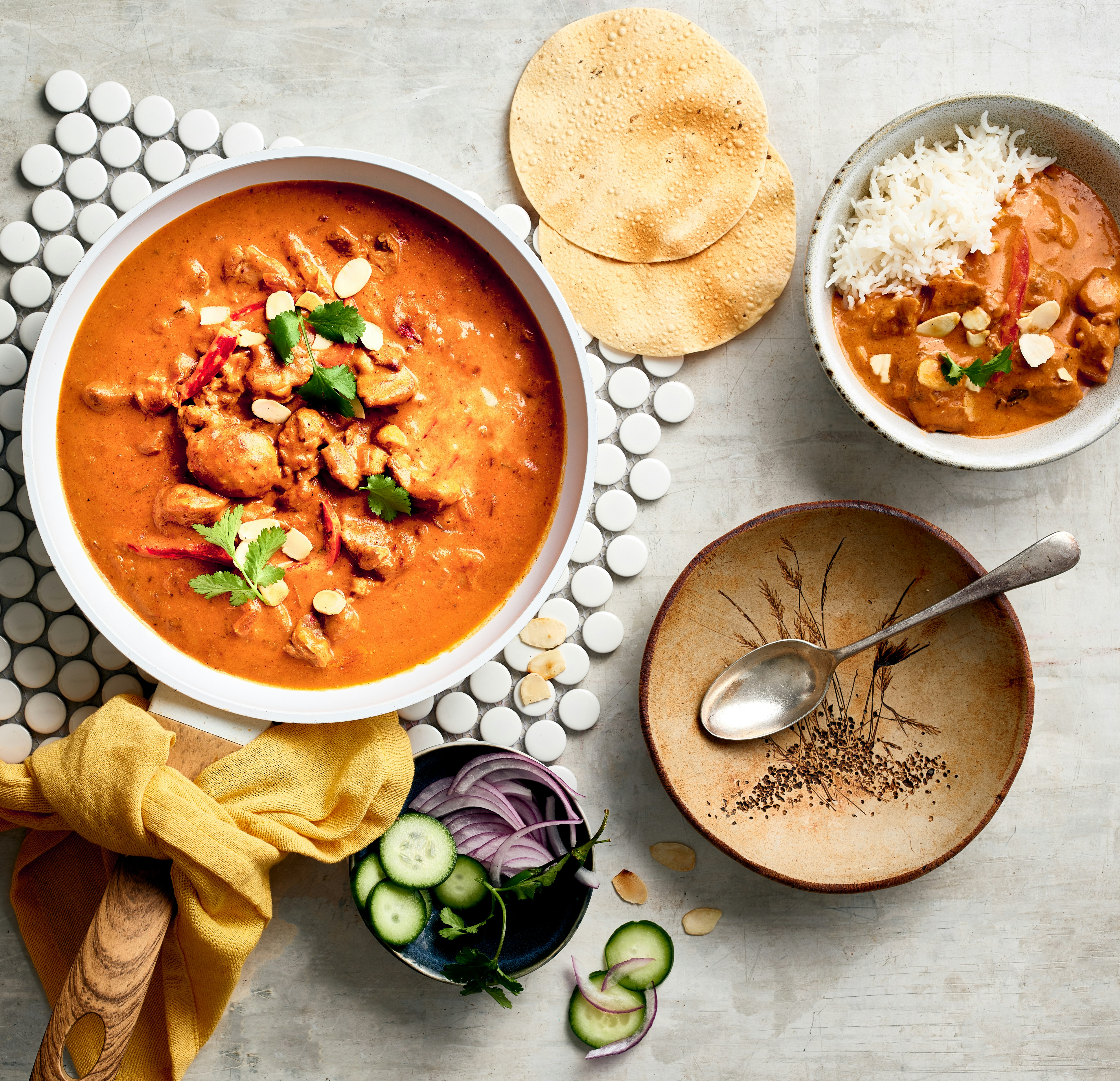
Gluten-Free & Dairy-Free Chicken Curry – Simple & Delicious
If you’re looking for a quick and easy chicken curry that’s full of flavour yet simple to make, this Chicken Curry with Almonds is the perfect recipe. Made with warming spices, tender chicken, and a creamy almond-based sauce, this dish is both gluten-free, dairy-free, and FODMAP-friendly, making it ideal for those with dietary needs.
Unlike traditional slow-cooked curries, this recipe comes together in just 30 minutes, making it perfect for a fuss-free midweek meal. The almonds not only add a subtle nuttiness but also help thicken the sauce, creating a rich and comforting dish without the need for cream or heavy ingredients that may trigger digestive discomfort.
Serve it with fluffy rice, gluten-free flatbread, or a side of sautéed vegetables for a complete meal. Whether you’re new to making curries or looking for a quicker alternative to your usual go-to, this chicken almond curry will become a staple in your recipe collection.
This post may contain affiliate or referral links. As an Amazon Associate I earn from qualifying purchases. I only share products I personally use or genuinely recommend. Thank you for supporting my work.
Jump to RecipeServing Suggestions & Side Dish Ideas
This FODMAP-friendly chicken curry is delicious on its own, but pairing it with the right sides can make it an even more satisfying meal. Here are some great gluten-free and dairy-free serving options:
1. Rice & Grains
- Steamed Basmati Rice – A classic choice that soaks up the flavourful sauce beautifully.
- Coconut Rice – Cook basmati rice with a splash of coconut milk for a fragrant, slightly creamy twist.
- Quinoa – A great alternative if you’re looking for something lighter and protein-rich.
2. Flatbreads & Breads
- Gluten-Free Flatbread – Perfect for scooping up the sauce. Try a homemade gluten free flour or buckwheat-based version.
- FODMAP-Friendly Roti – Made with gluten-free flour and olive oil for a light, soft bread.
- Poppadoms – A crunchy, light option that pairs well with curry without being too heavy.
3. Vegetables & Sides
- Sautéed Spinach – Lightly cooked with a drizzle of olive oil and a pinch of salt.
- Stir-Fried Courgettes – Quick to cook and adds freshness to balance the curry.
- Roasted Carrots & Green Beans – A simple, vibrant side that complements the curry’s warming spices.
4. Fresh & Cooling Sides
- Cucumber & Mint Salad – A light and refreshing side to balance the warmth of the spices.
- Dairy-Free Yogurt Raita – Mix coconut yogurt with fresh coriander, cucumber, and a squeeze of lemon for a cooling contrast.
- Lemon Wedges & Fresh Coriander – A squeeze of lemon and a sprinkle of fresh coriander bring a fresh, zesty touch to the dish.
Ingredient Swaps & Dietary Variations
This chicken almond curry is already gluten-free, dairy-free, and FODMAP-friendly, but here are some simple ingredient swaps and customisations to tailor it further to your needs.
1. Adjusting the Spice Blend
Many store-bought curry powders contain onion and garlic, which aren’t suitable for a FODMAP diet. To keep this curry gentle on digestion, try using my FODMAP-friendly curry powder recipe – it’s perfectly balanced for those following a low-FODMAP lifestyle.
2. Alternative Thickeners
- Instead of ground almonds: Use coconut milk (just a splash) for a creamier texture, or try ground cashews for a similar nutty flavour.
- For a nut-free version: Replace ground almonds with 1 tablespoon of tahini or an extra spoonful of coconut yogurt or oat yogurt to maintain creaminess.
3. Making it Vegan or Vegetarian
- Swap the chicken for tofu, chickpeas, or cauliflower. These will absorb the spices well and provide a satisfying texture.
- If using chickpeas, ensure they are canned (and well-rinsed) as they are FODMAP-friendly in small portions.
4. Protein Alternatives
- Instead of chicken breast, you can use chicken thighs for a richer flavour and juicier texture.
- For a pescatarian version, try white fish or prawns – just add them in the last few minutes of cooking to prevent overcooking.
5. Adjusting the Heat Level
- For a milder curry: Reduce or omit any chilli-based spices (if included) and add extra coconut yogurt when serving.
- For more spice: Add fresh chopped chilli or a pinch of cayenne pepper to taste.
Storage & Reheating Tips
This gluten-free, dairy-free, and FODMAP-friendly curry is perfect for meal prep and storing for later. Here’s how to keep it fresh:
1. Storing in the Fridge
- Once cooled, transfer the curry to an airtight container and store it in the fridge for up to 3 days.
- The flavours will continue to develop, making it even tastier the next day!
2. Freezing Instructions
- This curry freezes well for up to 3 months.
- To freeze, portion it into containers or freezer bags, leaving a little space for expansion.
- Tip: Freeze in individual portions for easy reheating.
3. Reheating the Curry
- On the hob (best method): Heat in a pan over medium-low heat, adding a splash of water or dairy-free milk to loosen the sauce if needed. Stir occasionally until heated through.
- In the microwave: Reheat in 60-second bursts, stirring between each, until hot. Add a little extra liquid if it looks too thick.
- From frozen: Defrost overnight in the fridge before reheating.
4. What to Avoid
- Don’t reheat more than once to maintain the best texture and flavour.
- If using rice as a side, ensure it is stored safely and reheated thoroughly to avoid bacteria growth (or make fresh rice when serving leftovers).
Troubleshooting Tips
1. The Sauce is Too Thin
- Let the curry simmer for a few more minutes to reduce and thicken naturally.
- Stir in an extra teaspoon of ground almonds to help absorb excess liquid.
- Alternatively, mix ½ teaspoon of cornstarch with 1 tablespoon of water, then stir into the curry and let it cook for another minute.
2. The Sauce is Too Thick
- Add a splash of hot water, dairy-free milk, or extra stock and stir until the consistency is right.
3. The Flavours Are Too Mild
- If the curry tastes too mild, try adding a little more FODMAP-friendly curry powder or a squeeze of lemon juice to brighten the flavours.
- Allow it to simmer for a few extra minutes to intensify the taste.
4. The Chicken is Dry
- Overcooked chicken can become dry. To prevent this:
- Use chicken thighs instead of breast, as they stay more tender.
- Cook the chicken just until it’s done—don’t let it simmer too long once fully cooked.
5. The Curry is Too Spicy
- Stir in a spoonful of dairy-free yogurt or coconut milk to cool it down.
- Adding a little extra almond flour or a pinch of sugar can also help balance the heat.
6. The Curry Tastes Too Salty
- If the curry is too salty, add a splash of unsweetened dairy-free milk or extra liquid to dilute it.
- A small amount of lemon juice or maple syrup can also help balance excess saltiness.
Recipe Notes
Why You’ll Love This Recipe
- Quick and Easy – Ready in just 30 minutes, perfect for a fuss-free dinner.
- Gluten-Free & Dairy-Free – Naturally free from gluten and dairy, making it suitable for various dietary needs.
- FODMAP-Friendly – Uses a homemade FODMAP-friendly curry powder to ensure it’s gentle on digestion.
- Rich and Creamy Without Dairy – Ground almonds give this curry a thick, satisfying texture without the need for cream.
- Meal-Prep Friendly – Stores well in the fridge or freezer for easy leftovers.
For this recipe, I use my homemade FODMAP-friendly curry spice mix to keep all the bold, aromatic flavours of a traditional curry while avoiding onion and garlic. Many store-bought curry powders contain high-FODMAP ingredients, but this blend is completely gluten-free, dairy-free, and gentle on digestion. It adds the perfect depth of flavour to this dish, making it rich, warming, and absolutely delicious. Feel free to make a batch to have on hand for all your curry recipes!
Frequently Asked Questions
✅ Can I make this curry ahead of time?
Yes! The flavours develop even more after a few hours. Store in the fridge and reheat as needed.
✅ What can I serve with this curry?
It pairs well with steamed rice, quinoa, gluten-free flatbreads, or sautéed vegetables.
✅ Can I make this nut-free?
Yes! Swap ground almonds for a spoonful of tahini or extra coconut yogurt for creaminess.
✅ How do I adjust the spice level?
For a milder curry, use less curry powder and stir in dairy-free yogurt when serving. For extra heat, add a pinch of cayenne or fresh chilli.
✅ Can I make this without chicken?
Yes! Swap the chicken for tofu, chickpeas, or cauliflower for a delicious vegetarian version.

Quick and Easy Chicken Curry with Almonds
Equipment
Ingredients
- 2-3 boneless skinless chicken breasts (about 500g), cut into bite-sized pieces
- 1 tablespoon coconut oil
- 1 tablespoon fresh ginger grated (or 1 teaspoon ground ginger)
- 2 tablespoons curry powder mild or medium, to taste
- 1 teaspoon ground cumin optional, for extra flavor
- 1 cup unsweetened almond milk
- 2 teaspoons almond butter
- 1 cup 240ml chicken stock (ensure it’s gluten-free)
- 1 medium tomato chopped (or 2 tablespoons tomato puree)
- 2 teaspoons ground almonds for thickening
- 1-2 teaspoons gluten-free soy sauce optional, for umami
- 1 cup vegetables optional, e.g., mushrooms, spinach, or bell peppers
- Green part of 3 spring onions finely sliced (for garnish)
- Toasted almond flakes for topping
- Salt and pepper to taste
Instructions
Sear the Chicken:
- Heat the oil in a large pan over medium heat.
- Add the chicken pieces and sear until lightly browned. Remove and set aside.
Sauté Ginger and Spices:
- In the same pan, add the ginger and sauté for 1 minute.
- Stir in the curry powder and cumin, cooking for another 30 seconds to release the flavors.
Create the Sauce:
- Add the almond milk, almond butter, chicken stock, tomato, and ground almonds. Stir well to combine.
- Bring to a simmer and cook for 5 minutes, allowing the sauce to thicken slightly.
Cook the Chicken:
- Return the chicken to the pan. If using vegetables, add them now.
- Simmer for 10-12 minutes, or until the chicken is cooked through and the sauce is creamy and thickened.
Finish with Spring Onion:
- Just before serving, stir in the green parts of the spring onions.
Serve and Garnish:
- Serve hot, topped with toasted almond flakes.
Notes
Pair with steamed rice, gluten-free naan, or sautéed greens.



Leave a Reply